
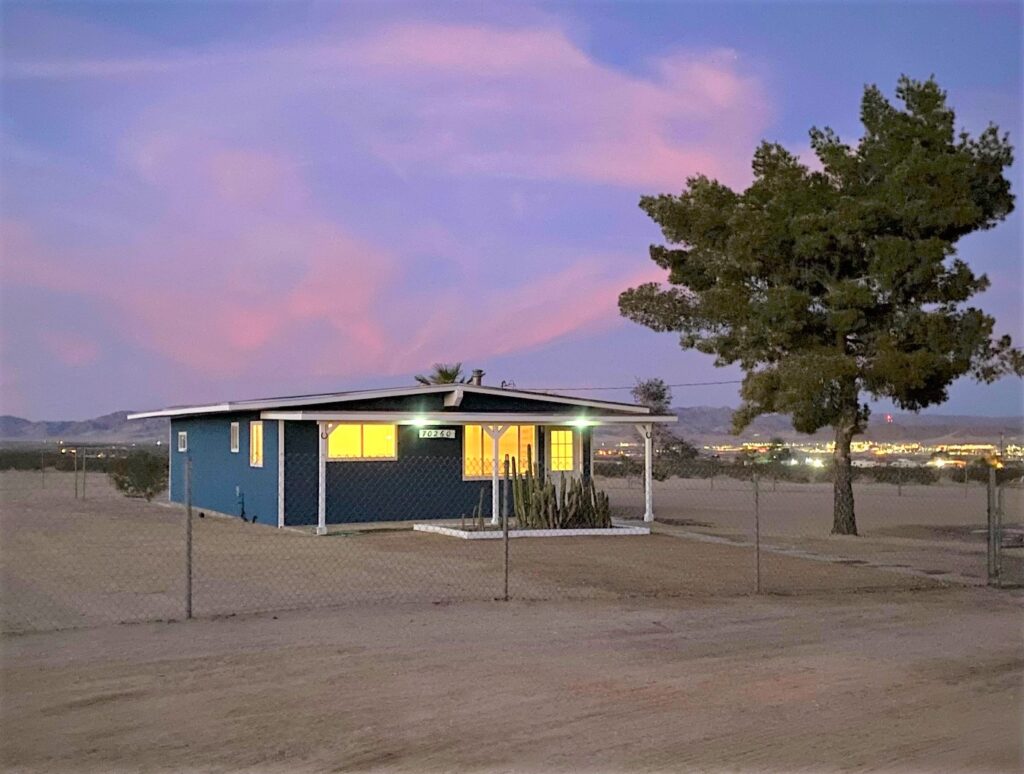
Owning a short-term rental or ADU in Twentynine Palms has been a profitable ride for many investors drawn by Joshua Tree National Park visitors and steady demand from the Marine Corps Air Ground Combat Center. But every investment needs an exit plan, and 29 Palms has a regulatory quirk that makes exit planning more urgent here than in most desert markets: the city's hard cap on Vacation Home Rental (VHR) licenses. If you own an STR or ADU in Twentynine Palms and you're thinking about your next move — selling, converting, refinancing, or holding — here's what you need to know before you act.
Why 29 Palms Is Different From Other Desert Markets
Twentynine Palms caps the number of licensed vacation home rentals at 500 units citywide, roughly 8.5% of the housing stock. With several hundred active licenses already issued and a waitlist of pending applicants, the cap creates real scarcity — and scarcity changes the math on every exit strategy. A licensed, cash-flowing STR in a capped market isn't just a house; it's a house plus a permit that a new buyer may not be able to replace. Understanding that distinction is the foundation of any exit plan here.
The Non-Transferable License Problem
This is the single most important fact for any owner planning an exit: Twentynine Palms VHR licenses do not transfer with the sale of the property. When you sell, your license is terminated, and the buyer must apply for a brand-new license — competing for a limited slot against everyone else on the waitlist. That means your buyer pool splits into two very different groups:
- **Buyers hoping to continue short-term renting**, who face real uncertainty about whether a new license will be available
- **Buyers who plan to use the property as a long-term rental, primary residence, or owner-occupied ADU setup**, who don't need a license at all
Marketing your property correctly to the right buyer — and pricing it based on realistic licensing odds rather than your own current cash flow — is critical. An agent unfamiliar with the VHR cap may overprice a listing based on trailing STR revenue that a new owner can't legally replicate.
Exit Strategy 1: Sell While the Cap Creates Scarcity Value
Because new VHR licenses are hard to get, an active, compliant license in good standing can itself be a selling point — even though it can't formally transfer. Buyers who understand the waitlist dynamics may pay a premium for a property with a strong compliance history, current inspections, and a track record that positions them well when they reapply. To maximize this angle:
- Keep your license, business license, and Transient Occupancy Tax filings current and penalty-free right up to closing
- Document your booking history, reviews, and net operating income clearly for due diligence
- Time the sale when the waitlist is long, since prospective buyers feel more urgency to lock in a property with strong odds of relicensing
Exit Strategy 2: Convert to Long-Term or Mid-Term Rental Before Selling
If a licensing gap or slowing STR demand has you worried, converting the property to a 30-day-plus rental removes VHR licensing from the equation entirely. Long-term and mid-term rentals (think traveling nurses, contractors on base-related projects, or seasonal Joshua Tree workers) sidestep the cap, the 9% Transient Occupancy Tax, and daily compliance monitoring. This strategy trades some monthly revenue for a much broader buyer pool at resale, since any investor or owner-occupant can step in without a licensing contingency.
Exit Strategy 3: Owner-Occupy and Rent the ADU Separately
For owners with a house-plus-ADU configuration, one of the cleanest exits is converting from a full STR operation into an owner-occupied primary residence with the ADU rented long-term (or vice versa). This structure appeals to a wide range of buyers — multi generational families, house hackers, and remote workers who want rental income without navigating the VHR cap. It also often qualifies for standard residential financing, which opens the door to owner-occupant buyers using FHA or conventional loans rather than investor-only financing, typically expanding your buyer pool and improving your sale price.
Exit Strategy 4: 1031 Exchange Into a Less Restricted Market
If your goal is to stay in real estate but step away from the compliance overhead of a capped STR market, a 1031 exchange lets you sell your 29 Palms property and roll the proceeds into another investment property while deferring capital gains tax. Many STR investors use this route to move capital into markets without licensing caps, or to diversify into long-term rental properties with lower management demands. Because 1031 timelines are strict — 45 days to identify a replacement property and 180 days to close — line up your qualified intermediary and target properties well before you list.
Exit Strategy 5: Hold, Refinance, and Extract Equity
Not every exit needs to be a sale. If your license is in good standing and the property is cash-flowing, a cash-out refinance lets you pull equity for your next investment while keeping the licensed STR income stream intact. This works particularly well in a capped market like Twentynine Palms, where holding onto an already-licensed property may be more valuable than trying to reacquire a license later.
Getting Your Documentation Exit-Ready
Whichever path you choose, buyers, lenders, and title companies will want to see:
- Current VHR license, business license, and TOT registration
- Signed building permits for any remodels or ADU construction
- Passed safety inspection records
- 12–24 months of booking and revenue history
- HOA or deed restriction disclosures, if applicable
Gaps in this paperwork are one of the most common reasons STR sales in Twentynine Palms stall during escrow, since the buyer's ability to relicense — or even close with certain lenders — can hinge on a clean compliance record.
Work With Someone Who Knows the VHR Cap
Exiting a short-term rental or ADU in Twentynine Palms isn't like exiting a conventional rental property. The licensing cap, the non-transferability rule, and the split buyer pool all change how you should price, market, and time your sale. Whether you're planning to sell now, convert your use, or hold for a few more years, working with a local agent or advisor who understands the VHR ordinance inside and out will help you avoid costly missteps and capture the full value of what you've built.
**Midas Realty Group – Sell 29** specializes in exactly this niche: helping short-term rental and ADU owners in Twentynine Palms navigate the VHR cap, position their property for the right buyer pool, and time their sale for maximum value. If you're weighing your options — selling now, converting your use, or holding for a future exit — reach out to Midas Realty Group – Sell 29 for a market analysis built specifically around the local licensing landscape.
Don’t Wait—Explore Your Options Now
We can help you evaluate your situation and list your property for sale quickly. Request a confidential consultation today.
Give us a call or text 714-932-1746 complete the Home Seller Consultation Form
High Desert Investment Property Resources
Why Yucca Valley Rental Properties Continue to Attract Investors
Are Joshua Tree Rental Properties Still a Good Investment in 2026?
Why Some High Desert Investors Are Selling Their Rental Properties in 2026
How to Sell a Multi-Unit Property in 29 Palms
Is Now a Good Time to Sell an Investment Property in Twentynine Palms?
Selling a Rental Property in Twentynine Palms: What Out-of-Area Owners Need to Know
Short Term Rental Transfer Guide for High Desert
Is Your Rental Property Quietly Costing More Than It's Making?
Is Your Property Manager Putting Your Investment at Risk?
Managing Rental Property From Out of the Area | Is It Time to Sell?
Selling Investment Property in 29 Palms
Can I Short Sell My Joshua Tree Airbnb?
Short Sell Vacation Home Joshua Tree: What Owners Need to Know